
Gaming Addiction
I’m a counsellor who very much enjoys gaming, but this blog post is about the dangers of videogaming – namely addiction.
You can read this as a blog, or watch the video with background footage of me trying to beat Dark Souls II with the ladle – a terrible weapon, I die… a lot.
Contents
Intro
In Aug, 2024, Liz Wheeler posted on X (aka Twitter) that men playing videogames is “Peak Unattractiveness”. This trended, and got people asking if gaming is a Red Flag? This added to the demonisation that gamers face.
Videogame addiction was recently added to the ICD-11 (it’s a real medical condition), adding to a whole history of shame and guilt for the hugely significant portion of the world that game: a message that gamers are lazy, unattractive, addicted, and even immoral or dangerous.
You may have watched some of my other videos advocating that gaming can be good for our mental health in moderation. It can meet these therapeutic needs:
- Mastery
- Escpism
- Advancement
- Exploration
- Optimisation
- Roleplay
- Configuring our moral compass
- Learning social skills or combating loneliness
- Competition
- Learning to lose
- fun and easy stimulation
- helping with mental health conditions like depression, anxiety, & trauma.
- empathy, mood regulation, decision making, and processing complex life events.
If our gaming is balanced, it can be good for us and even help us progress in life.
Recognising the needs we are meeting when we game can give us control, intentionality, and purpose in our gaming.
Liz Wheeler is wrong – gaming isn’t a red flag, but there is potential for red to be on that flag.
This video is about the darker side of gaming. About how a normal healthy hobby can lead to addiction (aka Compulsive Play or Internet Gaming Disorder).
Addiction & Prevalence
Let’s begin by bringing up a more classical chemical addiction – alcohol.
The majority of the UK (55% of men) will drink alcohol at least once a week, and of those a small minority will suffer with addiction
Imagine it like an allergy, only the allergic reaction is that once they start drinking they will be unable to stop.
In the UK in 2023, stats showed that about 3% of us are drinking at a High Risk level, and a further 3% at Dependency levels where the body enters dangerous withdrawal without alcohol.
Most people (some 94% of us), will drink alcohol and use it to enhance conversations, to relax, and have a good time; but that 6% of folks will veer into addiction or face serious consequences from their drinking.
Similarly, most people will be able to game for a few hours as part of a balanced life and a hobby.
A minority of people will find themselves with this allergy to gaming – they will be unable to stop, and gaming will begin to take over their lives or at least have negative consequences.
Now, gaming isn’t a chemical addiction, and as such there is no need for detoxing from it, but like other behavioural addictions such as gambling, porn, shopping and food – it has the potential to be addictive.
To get an idea of the prevalence of addiction in gaming,
- In the UK,10.84 million people enjoy gaming
About a seventh of the population (of which 45% are female, and the average age of a gamer is 28) - Of that 10.84 million, 700,000 – 1 million people in the UK are estimated to have issues with Video Gaming
which is around 1 in every 11 gamers (9%).
Looking at the literature, figures vary widely with some figures going above that 9% (up to 17% meeting thresholds for gaming disorder) and others as low as 0.8%.
A meta-analysis (Limone et al in 2023) pooled several prevalence and got a figure of 5% of gamers meet the thresholds of internet gaming disorder.
It is fair to say that problematic gaming is a thing that affects a significant portion of people with figures that are comparable to the number people who are addicted to alcohol.
Addiction Explained
Addiction is losing control over our gaming habits. It’s where gaming leads to harm in our life.
A gaming addict we will often relapse into periods of enthrallment in a game and feel a compulsion to game ever more intensely or more often.
Addiction is gaming to the point that our brain chemistry shifts around control, rewards, and impulsivity to gaming; and gaming becomes our tool for emotional regulation and self-soothing.
One characteristic of addiction is tolerance – which is needing more intensity of a substance or to use that substance for a longer to get the same reward, then eventually needing copious amounts of that substance just to feel normal.
With gaming, this looks like going to game whenever we face problems in our life that start to overwhelm us. It looks like a preoccupation with gaming in our thoughts and subsequently increasing the hours we put into a game or the level of intensity of our gaming sessions, and the games we play.
Symptoms of Gaming Addiction
- A compulsion to game and a need to spend increasing amounts of time gaming, which can lead us to neglect a whole host of things:
- Our Interoceptive Needs like remembering to get enough food, water, and sleep – or waking up in the middle of the night to game.
- Self-Care such bathing or going to the GP
- Physical health from our static posture or staring at a screen
- Exercise and Daylight
- Neglecting our family & relationships, or work & school – which can have financial and developmental consequences.
- Financial issues like spending money on loot boxes or skins which can mirror gambling addiction. Or buying new games and DLCs we cannot afford
- Our Social exposure being filtered through the games we play, which can make social interaction outside of the game harder, and not give space to develop social skills outside gaming. This can lead to a deep sense of loneliness and push us deeper into gaming, increase fears of socialising.
- Cravings – when we aren’t gaming, cravings make us think deeply of it and drive us to game. This can rob us of our presence and cause us to get quite frustrated with people close to us that block us from gaming.
- Lying or manipulating those around us so that we can game more – for example, we might pull a sicky at work when we’ve just downloaded a new game. Addicts aren’t bad people – they need to use the substance (or game) to feel normal, which pushes them to lie to meet that need.
- Emotional Regulation can risk being done exclusively by gaming, which can mean we lose tolerance to strong feelings or even discomfort and boredom – instead reaching for a game or watching and reading content related to gaming.
- Anhedonia, an inability to find joy in anything else besides gaming, because nothing else quite fills that hole, making the rest of life seem dull. It mirrors depression and is sad because eventually (with tolerance) even the game doesn’t make us happy, but nothing else does either.
- Cognitive Issues: It can affect attention, episodic and working memory, problem solving, writing, speaking and academic performance
- And addiction can cause Mental health conditions such as dissociation, concentration difficulties, mood disorders such as depression & anxiety, social phobias, loneliness, paranoia, and existential issues on purpose in life.
Causes
Let’s talk about the aetiology – what might cause someone to veer into addiction and what might be protective against it.
This section may seem lengthy, but if you’re experiencing problematic gaming it can be of therapeutic value to recognise the things that contributed to this, which gives us more control to shift some of these things and not just blame ourselves by focusing on Individual Factors.
Much of the research of this was from Limone et al, 2023 & Kiraly et al, 2023
Not all of these are simple causal relationships with feedback loops where it’s not certain which causes which. An example is that health conditions like depression are more likely to cause compulsive gaming, but people gaming compulsively are also more likely to be depressed.
Gaming Factors
The way a game pulls us in and can contribute towards compulsive play:
Games are engaging, more so than the scenes and sounds of TV by using your hands and putting you in control of a character. They utilise the senses (with the controlling acting like a stimming toy) & the mind is thinking, planning and responding during play. Furthermore, gaming offers a plethora of options and genres to immerse yourself in. In the UK of 2024, the gaming Industry was worth £7.6bn, and lots of research is put in to making games enjoyable experiences worthy of sinking our free time into.
There are some more sinister ways of ensuring you spend time on a game, and one of those uses Operate Pavlovian Conditioning through Intermittent Reinforcement – making rewards unpredictable and slightly random. You may get a rare drop once, or know it’s possible, so keep playing and grinding to get it again.
This technique is most sinister with loot boxes. Players buy these loot boxes with real world money in the hope of getting rare drops, skins, or unlocks and can find themselves with a gambling addiction investing money to get that rare unlock. A principle called the Sunk Cost Effect can entrench people into spending more on loot boxes if they’ve already spent money, because stopping spending makes the money already spent meaningless
“I’ve already spent £50 I might as well spend another £10”.
The players who end up spending the most on loot boxes are also often more vulnerable, rather than wealthy people spending money on a game they have less time to play – which can lead to a sinister exploitation termed ‘whale hunting’ where games aim to find players (whales) who are unable to control the amount of money they spend on microtransactions.
Playing online was associated with increasing the risk of gaming addiction. Online playing can include gaming whilst having chat opened or using social media to talk during gaming times (e.g. Discord). Playing online is especially true for games in a world that continues to move when you are not playing – think massive multiplayer online RPGs where you might even be in a clan and not playing sets you back against players who are.
What I’m saying, is games that create a sense of community, or there are social pressures to play, increase risk of compulsive play. This is magnified if a player has a romantic relationship or their friendship base revolve around gaming. Effectively, games that give you a sense of social connection can lead to compulsive play if that connection isn’t being met outside of gaming.
Competitive games were also more likely to risk addiction with genres such as MOBAs, real time strategies, shooters, and sports games. If a game gives you a sense of reward, mastery, achievement over others, or excellence; there can be a drive to keep playing to retain that achievement and not lose it – especially if you’re not meeting that need of mastery outside of gaming.
There was some mention that more violent genres of games were also associated with greater risk, though gaming causing violence is a myth after being extensively studied.
Finally many games allow you to create an avatar and customise their playstyle, appearance, and personality. This can lead to us meeting our needs through that avatar through a process called Identification. We can project onto that avatar and work their needs rather than our own, which was associated with compulsive gaming – when we form an attachment with our character in a game.
Individual Factors
These are the health, demographic, and personality traits of the individual that are more or less likely to predispose them to compulsive play.
2.5 males experience gaming disorder compared to every 1 female, despite the fact that 45% of gamers are female.
Younger brains are less developed in areas related to impulse control and novelty seeking, which predisposes adolescence to gaming disorder more than adults i.e. if you’re under 25.
There was mention of ethnicity and culture, for example how pressures to do well in school or job-competition in Asian cultures could mean people look more for rewards in gaming, but the evidence was contradictory and needs more research.
I would be particularly interested in stigma, which seems to fuel other addictions, and how cultural perspectives on gaming impact on susceptibility to gaming disorder. My hypothesis is that stigma creates shame, which gets people stuck in compulsive play stuck without being able to reach out for community or support.
Time spent gaming per day: In a study by Ahmed et al. (2022), those with addictive gaming spent an average of 5.25 ± 1.9 hours a day gaming, compared to 3.8 ± 2.4 h spent by non-addicted gamers.
It’s more about your relationship and reason for gaming, than how long you spend; but 2 hours a day seemed normal in the literature, whereas if you’re approaching 5 hours of gaming a day you’re at high risk of gaming disorder.
There were some emotional risks such as:
– people with alexithymia where recognising and expressing emotions is harder
– if you’re using gaming to regulate emotions and struggle to manage them
– if you are using gaming more for escapism than entertainment.
Impulsivity was linked to risk of problematic gaming, as well as mental health issues like depression, GAD, & low self-esteem.
There were also certain neurotypes like all three types of ADHD – perhaps because of the impulsivity thing, and some weaker links with autism (perhaps because it’s easy for gaming to become a special interest).
Gaming was seen as a respite of symptoms of neurodivergence and mental health – an escape.
There was also more substance misuse & suicidal ideation in gaming disorder, but it’s unclear what causes what.
People who are socially anxious or have less skills or social interactions are more at risk of compulsive play to meet those social needs. As are people who are lonely, or don’t have good social support systems or supportive close relationships.
There was finally an interesting link between Insomnia and Gaming Disorder. People with compulsive gaming tending to sleep for two hours less a night. They would either losing track of time and game late, or wake up in the night to gaming.
Like little gaming Gremlins, the risk of disordered gaming seems to go up a lot if you are gaming after midnight.
Environmental Factors
Our family, history, and situation
On family and upbringing, a positive, functioning family, is protective against gaming disorder. Picture a family where they communicate well with the child, where there’s communal family activities, warmth, connection, and the child has a secure attachment.
Parental monitoring and limiting access to devices was also seen to be protective – the assumption being that a child learns to self-soothe without using a game, so is less likely to use games for escapism or because of emotional overwhelm.
Considering Insomnia was linked to compulsive play, one factor to consider is if you have access to a console in the bedroom.
A more difficult family upbringing related to increased risk of gaming addiction. Imagine a family where there was conflict, neglect, an authoritarian climate, or violent discipline.
This is magnified with adverse childhood experiences such as abuse, neglect, & safeguarding concerns which are very highly correlated to addiction as well as mental health concerns and shame.
The meta-analysis also found a link between single parent households (irrespective of parental devotion) which they hypothesised to be around how available a parent is for their child – how much the child uses a device to self-soothe.
There was a link between success or satisfaction in work & school driving compulsive play. This is likely for competitive reasons of mastery. Effectively, people with gaming addictions tended to do worse in school which may either be gaming to feel rewards or success, or that a person is distracted from schooling because of gaming.
Similarly, how integrated a child is in school (their friendship quality), impacts on risk of compulsive play. If a child is either bullying or being bullied that risk goes up, same if they are more socially isolated. Risk increases even more if a person’s core friendship groups are instead through the game, and they associate with other problematic gamers.
People tend to associate with people whose use of a substance or a behaviour is similar to yours – until it is normal to game for 6 hours a night as all your friends do.
The final environmental factor was on pressures to make a career out of gaming, for example if you want to be a content creator, games designer, or e-sports personality.
that was the section on causes of gaming addiction – if any of them resonated with your history, the games you play, or as an individual; think if you could change or work on any of them and you may find that you need to game less.
Treatment for addiction
Recovery from addiction is notoriously difficult. Some philosophies, such as twelve steps will even hold that recovery is a process and being recovered isn’t possible – that you’ll always have the potential to relapse into compulsive gaming if you’re an addict.
For someone stuck in dangerous cycles of compulsive play recovery can look like:
- Harm-Reduction: reducing the risk of your gaming and building in space for those other things we might neglect, for example building in a reward system to earn gaming time.
- Awareness of our use by create a gaming diary of how much we are playing, and how the experience was.
- Working on shame and self-esteem that can come from addiction but only end up fuelling it.
- Looking at life holistically and boundaries with loved one to manage playtime expectations
- Recognising Triggers to lower our risk of relapsing into compulsive patterns
- Mindfully building tolerance to the discomfort of emotions and working to reduce the link to cravings or being tolerant to sit with cravings and not game on them.
- Deeper therapeutic work to look at some of the aetiology – the causes such as traumas, comorbidities, and adverse childhood experiences that predispose people towards addictive behaviours.
- Building an affirming community of others who support you in finding a safe sustainable relationship with gaming like Gaming Anonymous.
My own approach is about radical acceptance of you as trying your best,
deep empathy of the subconscious needs you are meeting to understand what gaming is doing for you (and if we can meet those needs elsewhere),
and using your special interest in gaming as a means of therapeutic exploration.
Conclusion
Hopefully this article has helped spread awareness of gaming addiction. That it affects a significant number of people, but that 95% of gamers will game without consequence or addiction.
For the 5% who do, we looked at what Gaming disorder is, noticed the devastating consequences and impact, talked about some of the causes so we can get a holistic idea of support, and talked about some ways of working with compulsive play.
If you are addicted to gaming, there is hope, and if you’re thinking about counselling then do feel free to get in touch with me for a free half hour intro call to see if I might be a good fit to journey with you.
References
Connor, CO. (2013). Gaming Addiction: Symptoms and Responses. Accessed on 6.12.24 from https://www.counselling-directory.org.uk/articles/gaming-addiction-symptoms-and-responses
Cleveland Clinic. (2022). Video Game Addiction. https://my.clevelandclinic.org/health/diseases/23124-video-game-addiction
Kiraly, O; Koncz, P; Griffiths, MD; Demetrovics, Z. (2023). Gaming disorder: A summary of its characteristics and aetiology. Comprehensive Psychiatry. 122(April). https://www.sciencedirect.com/science/article/pii/S0010440X23000135
Limone, P; Ragni, B; Toto, GA. (2023). The Epidemiology and effects of video game addiction: a systematic review and meta-analysis. Acta Psychologica. 241 (Nov).
https://www.sciencedirect.com/science/article/pii/S0001691823002238
Mohammed, S; Jan, RA; Alsaedi, S. (2023). Symptoms, Mechanisms, and Treatments of Video Game Addiction. Cureus. 15(3). https://pmc.ncbi.nlm.nih.gov/articles/PMC10065366/
Zastrow, M. (2017). Is video game addiction really an addiction? PNAS. 114(17). Pp 4268 – 72
https://www.pnas.org/doi/10.1073/pnas.1705077114
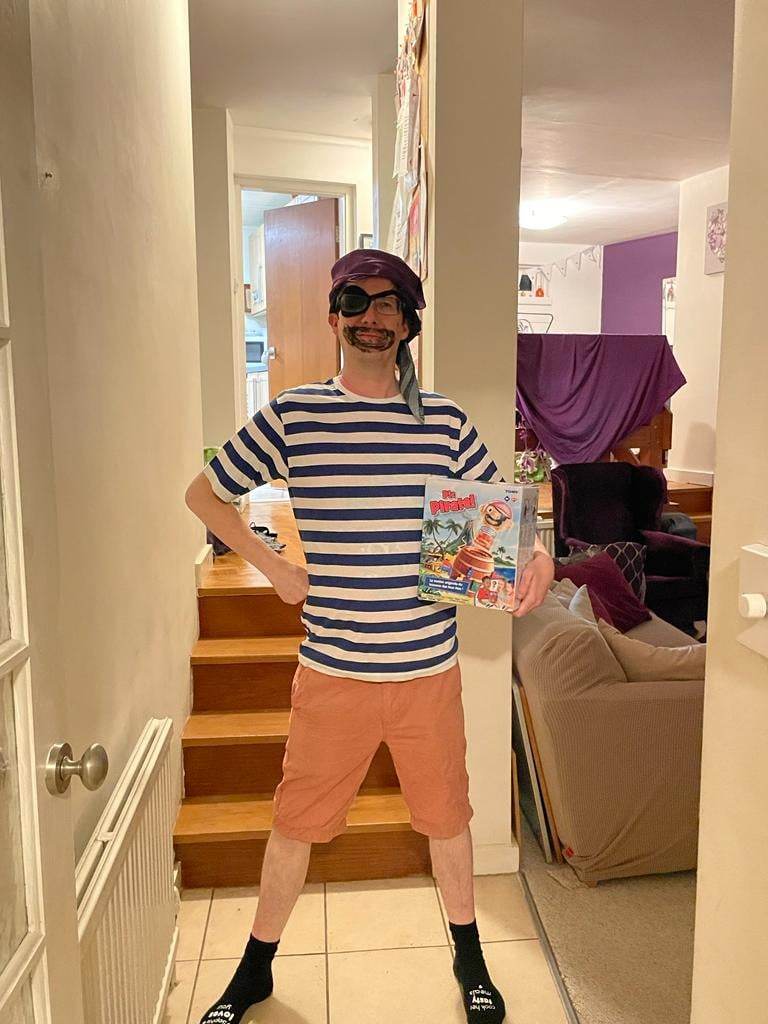
Simon is a Person-Centred Counsellor in Oxford working remotely and in person. He has lived in the county his whole life, and the city for almost 20 years. He appreciates the beauty of the city, nature, and connecting with people to help bring about meaningful change.
He is also a geek – who gets tremendous joy from gaming, crafting, cosplay, and creativity