
New Year’s Resolutions Success Guide
Make your New Year’s Resolutions or Goals work for you, and find positive motivators rather than shame or fear of consequences.
Contents
What percentage of New Year's resolutions fail?
When I facilitated this article as a group for guys in recovery from substance misuse, they guessed 95% of New Year’s Resolutions Fail. A podcast episode with Hope cited 80%, and from a quick google the figures I get range from 80 – 92%. Whatever the true stat is, the majority of people do not follow through on their New Year’s resolutions.
Why is this? What stops folks being able to do what they set out to do? What they’d like for the next year?
I’d like to help us unpack that. I’d like to help you to step away from failed resolutions towards a really concrete goal that you can work on, stick to, and maybe even find some joy in – rather than doing this out of obligation like so many of us do when we set up a New Year’s Resolution
Think of a New Year’s Resolution, or if you’re reading this later in the year just think of a goal. An ideal that you’d like to work on or place you’d like to get to. I’d like you to write it down on paper or your notes app on your phone, and as this article progresses, we’ll adapt that goal/resolution.
Check Your Motives
I read an article that reckoned that 62% of us take up a New Year’s Resolution out of pressure.
That could be our own internal pressure to finally be different in the new year, or it may be external pressure based on criticisms or what others want for us.
Look out for the word ‘should’. A goal based off a reflection of how we should shift rarely has that word, and if there is a should in your goal (I should lose weight, I should work on my drinking, I should learn better social skills) it may well be your motive is obligation rather than a sustainable desire to grow.
I have a fundamental belief that I cannot tell anybody to do anything. If I tell them to do something, they’ll do it for a little bit, and then they might be frustrated with for telling them then give up on it or do it begrudging rather than owning it.
For a resolution to fit, we must own it. It has to be ours.
Stages of Change
In the 80s, Clemente & Prochaska described a stage based model for change – originally designed for smoking cessation, but it’s also used a lot in addiction work or in any change.
Briefly the stages are a cycle and are:
Precontemplation > Contemplation > Preparation > Action > Maintenance > (Re)lapse >
Off these stages, 4/6 involve not actually doing the change. It’s a wrestling of lapsing, not wanting to change, having slight nags internally, planning, getting support….
When we see others e.g. if they’re smoking, we only notice when they aren’t going out for a fag, but the change process is incredibly complex and takes a lot of time to reach that place of cessation that is below the surface of the ice berg.
In terms of resolutions, New Year’s Day comes, and we might think we’re at the Action phase of stopping (e.g. smoking, or taking up the gym), but actually we’re at the Contemplation stage and end up starting the resolution way too early just because it’s Jan 1st.
Look at your goal you wrote earlier and ask yourself – ‘Do I really want this, or is this a goal that someone else wants for me?’ and then ‘Am I ready to start action on this goal, or am I elsewhere on the stages of change and need to prepare or just contemplate change a bit longer?”
If you answered no to either of these questions, that’s really normal – change takes a lot of time and support and identifying this will save you ‘failing’ a resolution by instead going back to the drawing board and being reflective over what you really want.
Positive and Negative Motivators
Negative Motivators for change are more motivated by shame or fear. We may want to take up running for example to get healthier, and a negative motivator could be that we are putting on weight and hope running will shift some of it, or there may have been a family bereavement, and we fear if we are not healthy, we will die earlier.
Both are negative motivators, and they will likely get you to lace up your boots and go out on your first jog, but they alone are unlikely to keep you running come February.
Positive Motivators for change are about the benefits of doing the goal, it’s more about finding joy in it, and developing positive motivators will keep the goal sustainable for you and turn it into a habit or even a hobby.
For me, I started running about two years ago. I was getting a belly in my mid-thirties and had been criticised for my weight. I ran out of guilt, thinking myself unhealthy and I needed to run for my figure and health which started me on the NHS Couch to 5k Program (a free app that has a 9-Week program that gets you running for half hour). I found the first two weeks especially hard – I was miserable running and was hard on myself.
After a few weeks, I found running a good space for reflection and it benefitted my mental health. I also noticed I could breathe deeper and ultimately gave up alcohol and cigarettes to run freer and further.
I started running out of shame of my belly fat, a negative motivator, but after a few weeks shifted from that negative motivator to a positive one of gaining mindful moments and health.
Is your goal more from negative or positive motivators? How can you shift your perspective away from shame and fear, towards the benefits of this goal so that you find sustainable joy in it – a positive motivator?
SMART Goal Setting
We can adapt our goals by making them:
Specific
Measurable
Achievable
Realistic
Timed
You have likely heard of SMART if you work in mental health or have read self-help – it’s almost cliché, and easy to not engage with, but spending a short amount of time to journal on your goal and consider these questions will make a huge difference in it succeeding for you. So let’s go through each letter:
Specific
We take the Resolution, which is a huge goal or vague concept based on an ideal self and break it down into something concrete so we know what we are doing. If a goal is too big, it becomes unmanageable. For example, we may have a goal to Stop Smoking, and Specific likely looks like
“I will approach my local cessation service, with a view of moving to a vape or gums, then look to reduce or stop this when I have learnt more skills in starting my goal of stopping smoking”
An unmanageable goal that is too big and not specific becomes a source of panic and anxiety. Many of your resolutions will be to stop doing things that are unhealthy (smoking, drinking, gaming, snacks….), but those things are coping mechanisms, and so ironically an intimidating goal may push you into wanting to do those things harder than a more specific compassionate goal. So have a look at your goal, and see if you can adapt it to be specific.
Measurable
We need to be able to Monitor the Goal so it isn’t this vague concept but has a value to it.
Our brains are quite black-and-white or emotional organs so our perception of our success with our goal can fluctuate with our mood, so instead if we can grade it, then we can accurately measure our progress with it. Measuring also defeats failure, because we can evaluate how our measurements fair and adapt them. It means that rather than relapsing on our goal, e.g, if we say we are going to give up alcohol or pornography, we can record how many days in January we used those things we want to stop.
So look at your goal, and see if you can quantify, monitor, or reflect on it so it doesn’t fluctuate based on your mood.
Achievable
Is this goal possible for you? This will likely be answered with a simple Yes or No.
If the answer is yes, then great; if it’s no, then look to adapt the goal to get a flavour of it in a way that is achievable for you.
Pretend my goal is to retire this year – short of winning the lottery, it’s not going to happen; but I could consider opening a private pension, investing, or looking for different income streams.
You may likewise have a goal that is unachievable – I want to be happy (which is a myth), so we need to reflect and change it slightly e.g. I want to set aside Friday nights to do an activity I enjoy.
Realistic
You’ve made your goal SMA, but is it realistic? Can you accomplish it compassionately, even though it is physically possible?
I could run a marathon over the summer, it’s achievable, but I’d need to devote myself to it – starting strength training in the gym and running 5 days a week. It would involve an awful lot of change in my life for something I don’t particularly want to do, so although it is achievable, it isn’t realistic. A Half-Marathon, on the other hand, would likely just need me to commit to a program and be realistic (though challenging) by the summer.
Any change takes sacrifice and loss in other areas, asking if a goal is realistic helps us to consider the extent to which we want it, what we are willing to sacrifice to achieve it, and if we can reach it without burning ourselves out. A goal that isn’t realistic is unlikely to change without an extremely high amount of motivation and dedication.
Timed
A deadline or time limit in which to accomplish this goal adds an urgency to start working on it. There’s a reason we often start goals on January 1st or a birthday – it adds a time limit. A goal will never happen if we never start it – I want to file my tax return this year, but it won’t happen until I sit down and do my accounting, so my goal there is allocating next weekend to doing it, and if something changes (e.g. the printer runs out of ink) I may adapt that time limit, but having a time limit creates a structure to put a goal within.
Time limits don’t have to be once either. Our goal may be to Lose Weight – we might plan to lose two stone (13kg) this year, but don’t just weigh yourself on Jan 1st; have a time to review at regular intervals. For example, we may weigh ourselves on the 1st of each month and have a time to review our goals and think what is or isn’t working with our weight loss. Planning in timed reviews also means a regular space to adapt the goal in line with SMART.
Look at your goal so far and consider each of the letters:
Specific – elaborate on the goal
Measurable – how will you monitor it
Achievable – is it possible
Realistic – is it realistic for you?
Timed – when will you start & know you have accomplished it, and when will you build in times to review your goal?
Closing Tips
Goals are tools
Make sure the resolution is a tool you use to achieve your aims, rather than a task that controls you. You are in control, and can adapt it. Don’t become a slave to your goals, don’t treat it as a taskmaster.
Review
Goals change over time as we know more about it. Don’t just treat it as a binary fail or success, review it as the goal changes, as your knowledge of it and your capacity to engage in it does, and as the seasons and your mood/life situation/capacity change.
Involve others
We are a social animal, and support and accountability can help us stick to our goals. Tell the right people though – we want support, not to be nagged to continue.
Journal and Reflect
Actually pause to write things down and adjust your goal. Try practical worksheets like the Positive and Negative Motivator table or SMART Goal adaptions.
You write slower than you think which helps to cement your thoughts.
Self-Compassion
Above all, go gentle and love yourself. It’s a better aim to do this than feel we need to change as we are defective. This would be my top New Year’s Resolution for you – change not to be acceptable, but out of acceptance for yourself. If our self-worth or value depends on hitting a goal, that’s a lot of pressure, and the goal is unlikely to be able to support our worth.
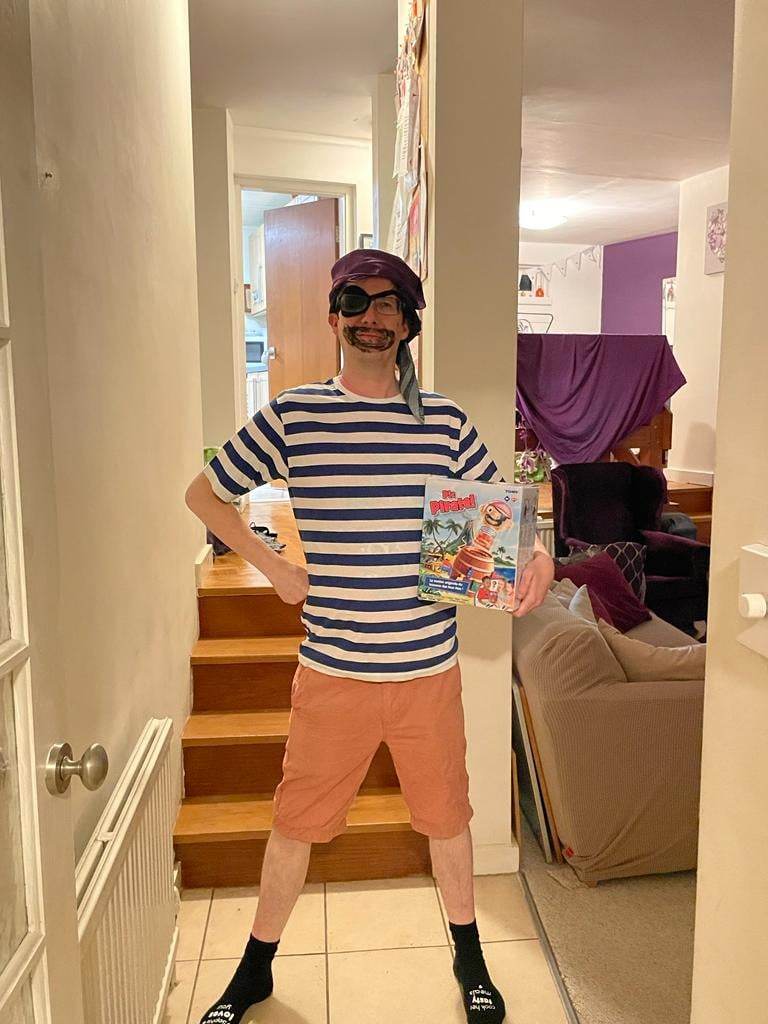
Simon is a Person-Centred Counsellor in Oxford working remotely and in person. He has lived in the county his whole life, and the city for almost 20 years. He appreciates the beauty of the city, nature, and connecting with people to help bring about meaningful change.
He is also a geek – who gets tremendous joy from gaming, crafting, cosplay, and creativity.
He would like to run a half-marathon over the summer, but loves himself first and will adapt that goal as the season changes.