
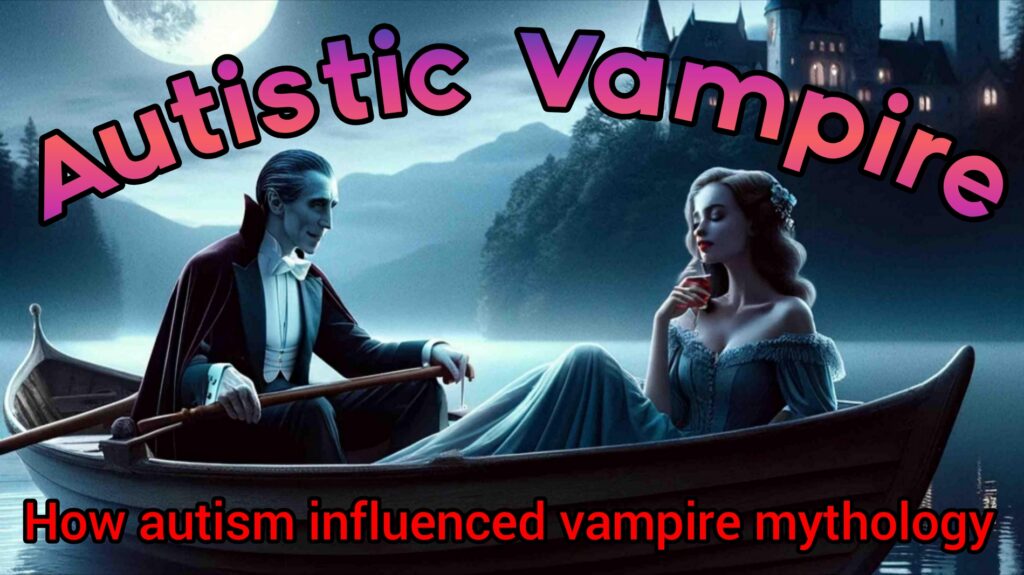
Autistic Vampire
“I am Simon, and I bid you welcome”
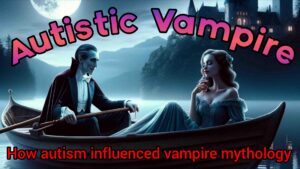
Today’s article is just in time for Halloween and it’s about autism and vampire mythology.
See, I’ve just started rewatching the BBC adaption of Anne Rice’s Interview With the Vampire and as I watched Louis’s (as a fledgling vampire)’s senses becoming more honed yet sensitive, or Lestat’s obsession with music, I noticed the parallels with some autistic traits.
So, this article looks at traits across different vampire mythologies and considers the parallels with autism.
Disclaimer: This video is lighter, almost a parody. A bit like my video asking if the Saw traps would rehabilitate. I am not saying autistic people are vampires – though vampire mythology predates the medical model’s idea of autism, so autism may well have influenced the mythology. So do take this lightly, but also remember Vampires are pretty cool and not a bad supernatural creature to be compared to.
See Last Year’s Halloween Video on if Saw Would Rehabilitate?
Contents
1. Sensory World
So, let’s look at some vampire traits and compare it to the autistic experience and we’ll break these points down into the vampire’s: Sensory World, Social World, and the World of Routine – comparing each to the autistic experience.
1.1 Sunlight Sensitivities & Honed Senses
Under this category we could include any other sense. Vampires are elite predators, with senses far beyond that of a human. Eyesight that notices the flapping of a flies wings or sees naturally in the dark, hearing that even hears human thoughts, and a sense of taste and smell that rivals that of a shark detecting blood.
The vampire’s sensory world is adapted for hunting humans, and with that, they are, in some mythologies, also plagued with the human world being too stimulating for their fine senses. This is especially the case with sunlight – in some mythologies the brightness simply hurts their eyes, diminishes their power, or they seek to avoid it. In others, like Nosferatu or Midnight Mass, the light of the sun is so intense for their sensitive skin, that it burns them to ash such that they have to retreat from it (for example being in a coffin during the day)
Sensory Processing Disorder affects about 15% of the general population, but 90% of autistic people. It’s characterised by an atypical sensory profile that may be hypersensitive in some areas, such that mundane environments are too sensitive; and hyposensitive in others, such that the person needs extra sensory stimulation to feel balanced.
Many autists will have sensory sensitivities to brightness, finding the same lights (that a neurotypical sees as normal) flicker, hum, and too bright. Autists with sensitivity to brightness, may also find the sun too bright or struggle with heat regulation and so avoid sunny days or require protective gear like darkened glasses.
1.2 Garlic and Food Preferences
Vampires are allergic to garlic in some mythologies or will avoid and dislike it. Many autistic folks have gastrointestinal issues as well as the previously mentioned sensory sensitivities to things such as smell, taste, and texture. Garlic is pungent in taste and smell, and can agitate GI issues, so again – maybe there’s overlap between autism and the vampire’s weakness or avoidance of garlic.
Sensory sensitivities can also combine with a need for predictability, order, and control within a neurotypical world that can predispose autistic folks to restrictive diets (even ARFID). Foods that are unpredictable (like bananas whose flavour changes as they ripen) can be challenging, as can foods which clash with our sensory profiles (taste, texture, smell) which contributes to that narrow predictable diet. Routine in autism may mean you eat a small number of dishes cooked in a certain way, or struggle going to restaurants because of the sensory intensity and uncertainty of what you are going to be served. Some autists will make cooking a special interest and take great delight in perfecting certain meals.
Vampires are Sanguivores in most mythology (in others they may eat things like flesh or qi, but we’ll stick with blood today).
The mythologies differ: some vampires (like Dhampir) are able to subsist on human food but crave blood, others finding it tastes bland (like paste) or vomit after trying to eat it, and some vampires are even wounded by drinking anything besides blood. Vampires tend to have preferences like human blood over animals, and the blood of the dead may be poisonous to them so needing a living victim. They also have niche preferences for who they feed from – with some vampires gaining knowledge or ability from the people they feed off, or others finding the flavours of certain people more sought after (an aristocrat’s blood perhaps taste fine, being able to savour the creativity of drinking from a musician, or vicarious intoxication from feasting on a drunkard at the local inn).
So that was the sensory world of the vampire – combining this adaptive hunter with honed senses, who is restricted in what they eat and where they can go by those very senses. In some mythologies vampires can’t cross running water – maybe that could also be a sensory thing with the sound and feel of wetness. In any case, sensory sensitivities exist in both autism and vampirism.
2. Social World
How the vampire communicates with others, the language it uses, and its place in the social standing as an eternal undead creature.
2.1 Being Different
Vampires used to be human but have physiologically and existentially changed in not naturally dying. They have often lived through several lifetimes and in many mythologies look human rather than as grotesque monsters. There is then a strange sense of both belonging to the community and being separate from that many neurodivergent people will relate to. Autists are not undead eternal creatures but can relate to that experience of having a brain that is different in the way it processes, communicates and socialises in a world that isn’t designed for them. Autists can also have a wider awareness of social justice and existential issues such as death, that most of us manage the angst of by simply forgetting the fact that we are mortal. Finally, autists often have divergent ways of thinking – approaching things in a bottom-up way, social justice issues can be important, questioning why things are the way they are, having special interests that are deeply engaging to them; just like a vampire that questions the affairs of men, autists can find themselves outsiders questioning social conventions and social etiquette.
2.2 Can I come in?
In some mythologies, vampires are unable to cross the threshold of a home without being explicitly invited in. Autism can present with difficulties with social interactions where the social rules and norms are often inconsistent, confusing, and implicit. Autists don’t need an invitation to cross a threshold, like there is some invisible barrier, but an explicit social contract can create more ease than none. There is something about consent and understanding social norms by it being invited to an event that can make it easier than an unplanned environment where we are unsure if we are welcome or unwanted.
2.3 Communication
Vampires, being eternal, often speak in an antiquated way and are part of high society. That society ages & dies, and the aged vampire are left with overly formal language or gestures that are foreign to the current generation or lack the intonation and prosody in the voice that are culturally appropriate. Some vampires have a more monstrous appearance, or are more corpse-like, like the Chinese vampires (Jiangshi) or Nordic Draugr, so if a monster or corpse was trying to communicate there would be obvious issues with body language and facial expressions.
Autism is marked by struggles with social communication, often learning language at a slower pace than neurotypical children, and some autists will be non-verbal altogether or experience selective mutism or the loss of language when hit with burnout and autistic regression. Around half of autists are also alexithymic which means a difficulty putting language to emotional experiences and experiencing feelings in a very un-neurotypical way. Alexithymia can mean that some autists have very flat faces, and less intonation or prosody in their voice. This flat affect and lack of facial expression can be quite disconcerting to neurotypicals, as a flat face is hard to read or predict (it’s the same reason masks are scary in horrors – research shows that a face you cannot predict is more disconcerting than an angry looking face because you can read that and avoid and angry person). Neurotypicals also tend to put more weight to the way something is said than the actual words used, so saying “I’m actually really struggling at the moment” may be ignored by a person if it’s said in a flat or jolly way as more attention is paid to the look on the face and way it’s said. If we are alexithymic and have that more flat face and affect, we understandably need to compensate by having precise language for explaining our experience.
So, like vampires, some autists may use more antiquated language that is overly formal or descriptive for the social setting, use gestures which don’t culturally match the situation (or be stimming in a way that looks like gesturing), have body language or a face that is hard to read or some people may find unsettling, and in practicing for social setting may use words that are more from books and fit in less with the slang of that generation.
2.4 The Masquerade
Some mythologies have vampires as being totally other, a monster that hides in castles and caves and keeps itself separate except to hunt and drink blood. In other there is a complex vampire social structure that they maintain, or they try to blend into the human world to not attract unwanted attention towards their true identity. In learning to better mask and blend into human civilisation, vampires learn to control their vampiric traits like blood lust, even perfecting social arts.
Autists will be all too familiar with masquerading as neurotypical and hiding their own autistic traits such as going to neurotypical places that are too stimulating to their sensory needs, fawning over others using exaggerated facial expressions or adding tone and prosody to their speech in a deliberate way to appear neurotypical and not be socially excluded, forcing eye contact or suppressing stims to not appear different, anxiously avoiding not talking too much about our special interests, and rehearsing and performing socially whilst acting as though small talk is pleasurable in much the same way that one might give a speech. The fundamental human need is to belong, and being different often results in early experiences of bullying, so masking traits that aren’t socially revered is sadly part of the autistic experience (as well as the vampiric one to avoid pitchforks and torches).
2.5 Alone Time
Many Vampires have a lair that is private such as a castle that is adapted to their needs. Their lair will block out overwhelming sensory information such as sunlight, or have a coffin in which they can sleep. The vampire has a balance between the masquerade or need to hunt from civilisation, alongside a need to retreat from it.
In the same way, masking one’s identity and autistic traits is exhausting. Just like a vampire needs a coffin, autists benefit from low sensory environments where they can rest their honed senses and avoid meltdown or shutdowns. Living up to neurotypical demands, can also be overwhelming and alongside the social masking contribute strongly to autistic burnout. A bodily sense of depression and exhaustion from years of performing is common. The cure for burnout is deep rest and low demand environments alongside as well as sensory soothing and opportunities to engage our special interests.
In the same way that vampires are forced into unmasked alone time because of the sun, autistics need space where they aren’t masking to recharge.
So that was the Social World. Like vampires, autists often feel different, masquerade as neurotypicals, and need space to process.
3. The World of Routine
This last category is about social imagination – the autistic need for order, predictability, routine, and explicit structure without plans suddenly changing. Routine provides comfort in a chaotic neurotypical world, and routine or ritual is also a part of vampire mythology.
3.1 Special Interests
Some vampires have special interests. In Bram Stoker’s Dracula, he is obsessed with London, having researched it thoroughly and wanting to purchase a property there. Dracula insists Jonathan Harker remain with him in his castle, to better educate him in English culture – looking at maps and discussing literature.
In the tabletop roleplaying game, Vampire the Masquerade, the Toreador clan are so obsessed with art and creativity, that they’ll stop to marvel in awe at beautiful things, and are impacted in dull unbeautiful areas by this bane. They also feel a compulsion to talk about and engage with beautiful objects if within their eyesight.
Special interests are rife within vampire mythology, and can often be tied to purpose in the face of immortality.
Autists also tend to develop special interests – topics, things, people, or creatures that they derive hyperfocus and pleasure from researching, engaging with, and talking about. Much like the Toreador, autistic hyperfocus can be a beautiful thing than can give meaning, and true pleasure or flow state; many autists will find their work or relationships align with their special interests so they can positively improve life. Special interests can also have negative sides, forgetting to look after our self-care like going to bed too late or forgetting to eat because you’re so engrossed with a special interest but unable to pull away; finding topics of communication naturally gravitate towards your special interest and not being as aware when others want to change the subject, or struggling to find focus and interest in other necessary tasks and areas of life we need to live.
3.2 Repetitive Rituals
In Slavic vampire mythologies, a vampire will count a bag of grain or beans thrown on the floor, Similarly Chinese vampires will count coins if you throw a coin purse on the floor. Then, of course, there is Count von Count – the muppet from Sesame street who, well…counts.
Similarly, an early indicator of autism in children is ordering of things like toys and categorising them. Finding a pleasure from categorising and counting.
Vampire mythology is also steeped in ritual – in Western culture the cross or holy water damaging vampires or not being able to enter churches, in Iceland the Draugr being hurt by iron but no other weapons, the Chinese vampires being immobilised by spell scrolls being pinned to their heads. Vampire mythology is very ritualistic in how they behave and their weaknesses.
Ritual and routine is also important in autism. Autists often process the world from the bottom up, where the detail needs to be processed before the ‘big picture’ can be seen, rather than a more neurotypical who get the concept first then the detail. Bottom-up processing can make the world… a lot – on top of sensory sensitivities from unpredictable environments and the demands that come with novelty. For these reasons, autists value routine and predictability – practicing and doing things in the same way, having social controls by being aware of how events will likely play out, and being able to regulate more in ordered low demand environments. From the outside, this can look like unusually rigid structures and timings, or being particular in how tasks should be completed whereas from the autistic experience it makes sense and is again a vampire-autism parallel.
3.3 Limerence
I’ve heard limerence described as a special interest in a person, rather than an object or activity. If you’ve not heard this word before, it’s not an autistic thing, but does seem to be more prevalent in neurodivergence (a monotropic focus on someone).
Limerence is often compared to infatuation or a crush, but it can also be experienced platonically rather than romantically. It’s an intense and involuntary obsession towards another person (usually romantically), who often doesn’t reciprocate; accompanied by a preoccupation thinking about them that is both cognitive and emotional.
So limerence is like developing a special interest in a particular person, and is also rife in vampire mythology. In the Twilight novels we could compare it to Jacob’s Imprinting (I realise Jacob is a werewolf and not a vampire – so maybe more like Edward’s feelings towards Bella, only that’s eventually reciprocated).
In Bram Stoker’s book, as soon as Dracula is off the Dementor and in England, he seems to fixate his attention and feeding on an individual woman (first Lucy, then Mina after Lucy’s death). So both vampires and autists are prone to limerence.
3.4 Sexual Diversity
An article in the Sexual Health Alliance said that 30-50% of individuals in certain kink communities display autistic traits. The kink community has clear communication, consent, and boundary negotiation with respect which can create a sense of sexual safety and may help meeting sensory needs during sex.
Many polygamous or ethically non-monogamous people will also have autistic traits where communication is direct and expected, connection can be deep and structured, and monogamous relationship patterns aren’t seen as a demand that needs to be followed by a divergent brain.
There’s a big intersectionality between LGBTQIA+ and neurodivergence that often isn’t spoken about – likely because early autism research was really focussed on children rather than exploring what adult autistic sexual identity looks like.
Likewise vampire erotica and relationship structures are more diverse. The Interview with The Vampire has Louis come out as gay when turned by Lastat, Dracula was polygamous with three brides, and quite often vampire sex blends blood play & feeding on the lover, or other supernatural aspects to the sexual encounter.
Like autists, vampires often have a more open view of sex and sexuality.
Conclusion
We compared autism and vampirism to see if there was overlap that may have contributed to the mythology.
We talked about the Sensory World with food preferences like garlic, and sensory sensitivities like daylight
We talked about the Social World with masking one’s true form, having more formal diverse methods of communication, appreciating consent, and needing alone time from society to avoid burnout.
We talked about the Routine World with rituals, special interests, limerence, and sexual identity & practices.
With these similarities, it seems only fair to say that the autistic experience has likely influenced our current vampire mythology.
I think I would also like to conclude by saying that vampires are cool, and many portrayals of autism are incredibly deficit focussed, just as many vampiric traits are seen as weaknesses.
Vampires may be weak to sunlight, masking, and be different; but they are also wise beyond mortal kind and supernatural in their abilities. I can understand why there may not just be similarities with autism, but vampires can be seen as positive representation and perhaps there is a big autism vampire fanbase?
Likewise, autists may have spikey profiles which cause distress and problems functioning in a neurotypical world, but they are also cool – and the struggles don’t invalidate the strengths of the neurotype.
Simon is a Person-Centred & DBT Counsellor based in Oxford working remotely and in person. He has lived in the county his whole life, and the city for almost 20 years. He appreciates the beauty of the city, nature, and connecting with people to help bring about meaningful change.
He is also a geek – who gets tremendous joy from gaming, crafting, cosplay, and creativity